





The Invoice Arrived in Ceuta
Council on Future Conflict
Last week on the Council we were already treating Ceuta as an open wound, but as we saw in the last 24 hours and on today's show, it is an angry infection with a violent natural antibiotic response.
This week the residents went to the beach.
If you have been with this channel for a while, that is not a twist. That is a neighborhood clocking in for a shift Madrid advertised, then outsourced to rubber bullets and a Red Cross truck.
One thesis, three costumes. We imported a war, named it compassion, and acted shocked when it showed up speaking Spanish. Dearborn is the domestic end-state. Iran’s Marxists were the parable: they helped the revolution, then the revolution shot them, because that is what revolutions do with the help. Hormuz was the reminder that the shooting war did not pause so Madrid could have feelings. Ceuta was the demonstration. Now it is the invoice.
We said the 2016 caravans were not a humanitarian accident. They were a pulse aimed at a border. Europe ran the same play with a Mediterranean fence instead of a desert one. Combine the official religion of multiculturalism with a wave that does not assimilate, and you do not get a mosaic. You get replacement with better stationery.
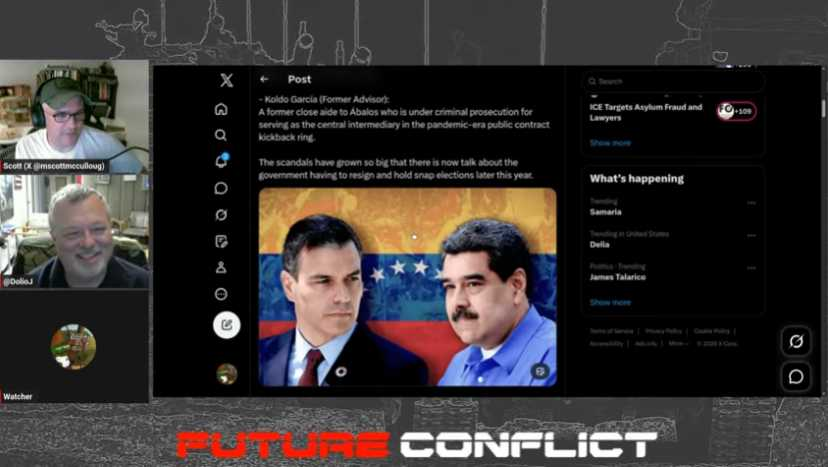
Spain’s problem is not that the enclave is “complicated.” It is that Pedro Sánchez already sold the peninsula a regularization billed at half a million people living in the shadows. The window opened in April. Closed on 30 June. All you had to have to be eligible was five months on Spanish soil before the cutoff, no criminal record, and a one-year residence-and-work permit that renews. That is a backdated visa with a GDP speech attached. By close, more than a million applications were on the desk. Latin America filed most of the paper, Morocco and the rest of Africa filed enough of it. Call the party card socialist if you want the stationery. The faith is older: the state as priest of the open door.
The July pulse into an eighty-four-thousand-person city was the same policy wearing swim trunks. Madrid still wants credit for “managing” a seventy-thousand-person surge in two days while the capital is busy turning last year’s irregular stock into this year’s legal labor forecast. The people who live on that sand should be incensed. A country that once produced El Cid now has a premier treating a military-age beach camp as a demographic worksheet. Europe should read it as another domino, not a Spanish peculiarity. When the capital legalizes the stock and the enclave eats the surge, the rest of the Union is next in line to pretend the two files are unrelated.
Joe asked how many women were in the first wave. The answer on the sand was what it always is in these pulses: overwhelmingly military-age males with a press kit.
I put the moral stupidity in one line on the show:
“It’s almost like we want them to do exactly what they’re doing to us.”
That is the whole argument, if you are honest. Suicidal empathy is not kindness. It is a cover charge for a club that will not let you out. Look at who volunteers for the first bus. Then look at who is still standing when the committees adjourn.
Joe has been staring at the same zip code long enough to skip the TED Talk:
“I’ve been of that opinion for a very long time. About twenty-five years.”
Dearborn: reclaimable, or treat it like an infection that polite tools will not touch. We joked about napalm because that is what you say when you already know the official toolkit was fired into the ocean. Joe’s actual point on Europe was colder than the joke. Seville sent police to a border. Frontex, the EU service that exists so Brussels can say it has a border service, did not. The Union will issue a statement. It will not issue a unit.
If they do not see it as conquest, they see it as their right. They are not here to become Spanish. They are here to keep being what they were, with better benefits and a beach.
Watcher, when the state fails, keeps the ledger:
“None of the people in charge during that got any sort of punishment whatsoever… Most of them got promoted, in fact.”
He was talking about another American disgrace this week, because the pattern does not respect oceans. Nobody who opened the gate gets a reprimand. They get a title. Then the neighborhood gets the riot gear. In Ceuta, the police pointed the less-lethal end at Ceutíes so a camp could stay on the sand. If that does not tell you who the state thinks the problem is, you are not listening. You are fundraising.
What the last forty-eight hours actually were
Trampolín and Benítez, 26–28 August. Residents tore down tents and shacks. Belongings went into the fire and into the sea. Police fired warning shots and rubber bullets to keep the city off its own beach. Migrants pushed toward a pier. The night before, thousands in the street: invaders out. The chant that traveled: Ceuta no se vende, Ceuta se defiende. Un caballa nunca se rinde.
Then they sat down in front of the Red Cross. “Mafia,” they called it. Ugly word. Also a policy argument with the manners kicked off. If you keep feeding a camp that was never supposed to be permanent, it becomes a neighborhood. One local said it without a think tank: twenty-seven days of meals and they will not leave, because why would they. We do not fit.
Same stretch: about seventy people stoned a Spanish military vehicle. Soldiers left on foot and called police. Twelve Moroccan migrants arrested. At least one soldier hit. AFP said the motive was “not immediately clear,” which is wire-service for you, already-know.
Numbers, because officials like numbers more than beaches. Late July: more than seventy thousand irregular entries into an enclave of roughly eighty-four thousand. Most went back to Morocco. Madrid now says a few thousand remain, under 7,000 on a good briefing day. Local officials and aid counts have been saying closer to ten. Pick the press conference. Either way, this is not a processing center. It is a pressure cooker with a view of Africa.
X did what X does. The beach-and-fire clip racked up hundreds of thousands of views overnight. “A Ceuta native never surrenders” traveled with it. Treat that as the mood. Treat the Telegraph, AFP, and DW as the spine. We do not need the atrocity captions random accounts invented before breakfast. The beach is enough. The rubber bullets at residents are enough.
The Invoice
When a neighborhood takes a beach, that is not order. It is the autopsy of order. Side A will call it the border restoring itself. Side B will call it a riot with better slogans. Both are true, and both are an indictment. Last week we named weaponization, replacement, and suicidal empathy. This week the bill came due on Trampolín.
A caballa never surrenders is a good chant. It is a terrible substitute for a government. When the Red Cross needs a police escort to deliver bread, you are not having a migration debate. You are watching a state lose the only job it was hired to do.
Dearborn was the question: reclaimable, or orbit. Ceuta is the same question in Spanish, with a fence you can see from Morocco. Empathy that cannot say no eventually outsources the no to whoever still lives on the block. That is not a theory. That is Wednesday night into Thursday morning.
If the show does what this channel does, you will hear Madrid is managing it. Then you will hear the beach. Then you will hear the line Brussels will not put on a chyron: a city that has to chant it will not surrender has already been surrendered once.
If Spain will not summon El Cid, the neighborhood will keep doing the job with fire and a sit-in. Treat that as a European forecast, not local color.
Next seven days
Returns versus the remaining camp — does the number move, or just the podium?
A second night, then a third: one burned camp is a spasm. A week is a pattern.
Whether Rabat meters the pulse or cooperates.
Whether Madrid’s less-lethal is for residents, migrants, or whoever is on camera.
Whether Melilla and the Canaries watched the clip.